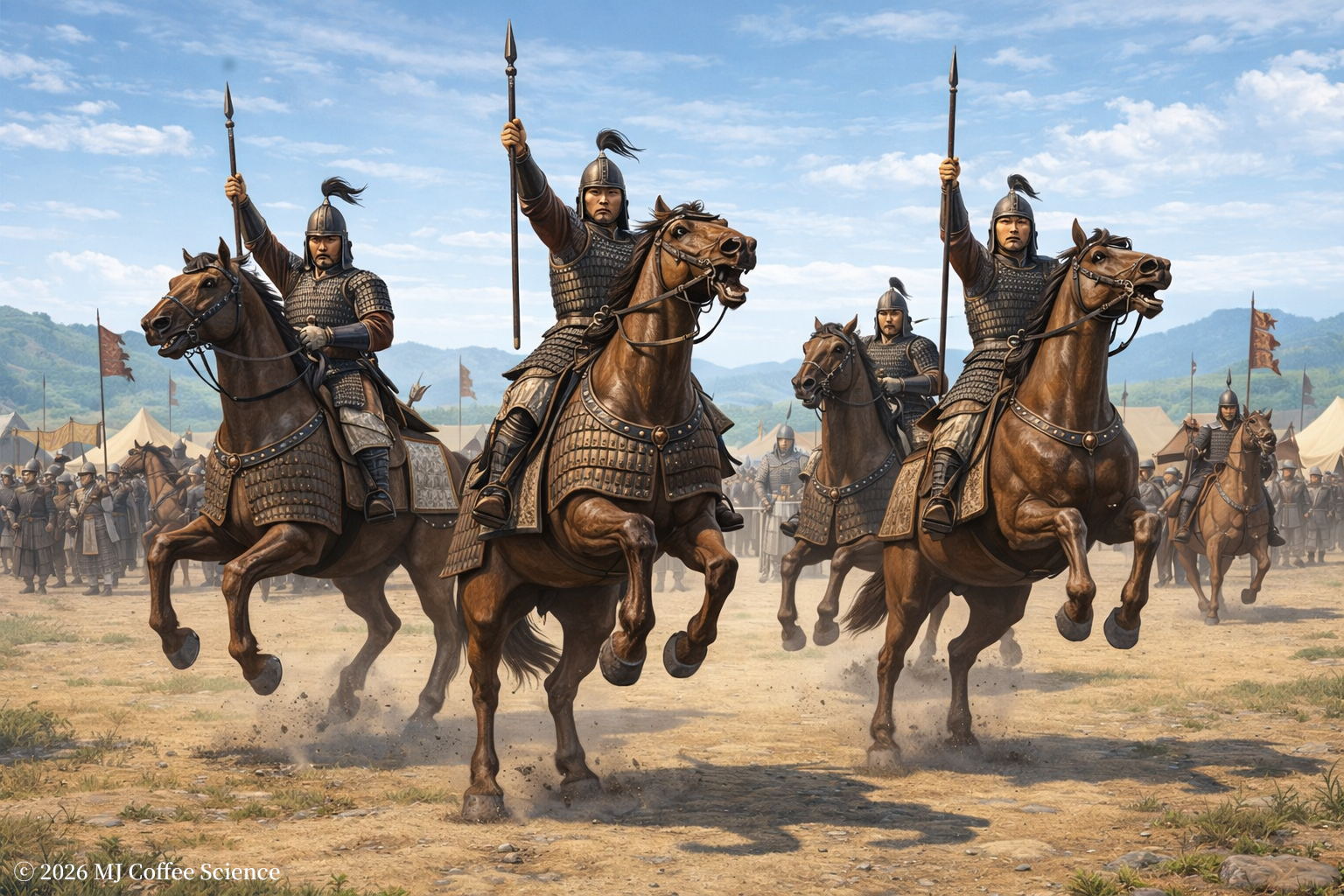
Beyond the mist that coils along the Nakdong River, has it been a thousand years since the hoofbeats fell silent? Awakened in a single body of hardened grey clay, you carry forward the dry war-cry of that distant day.
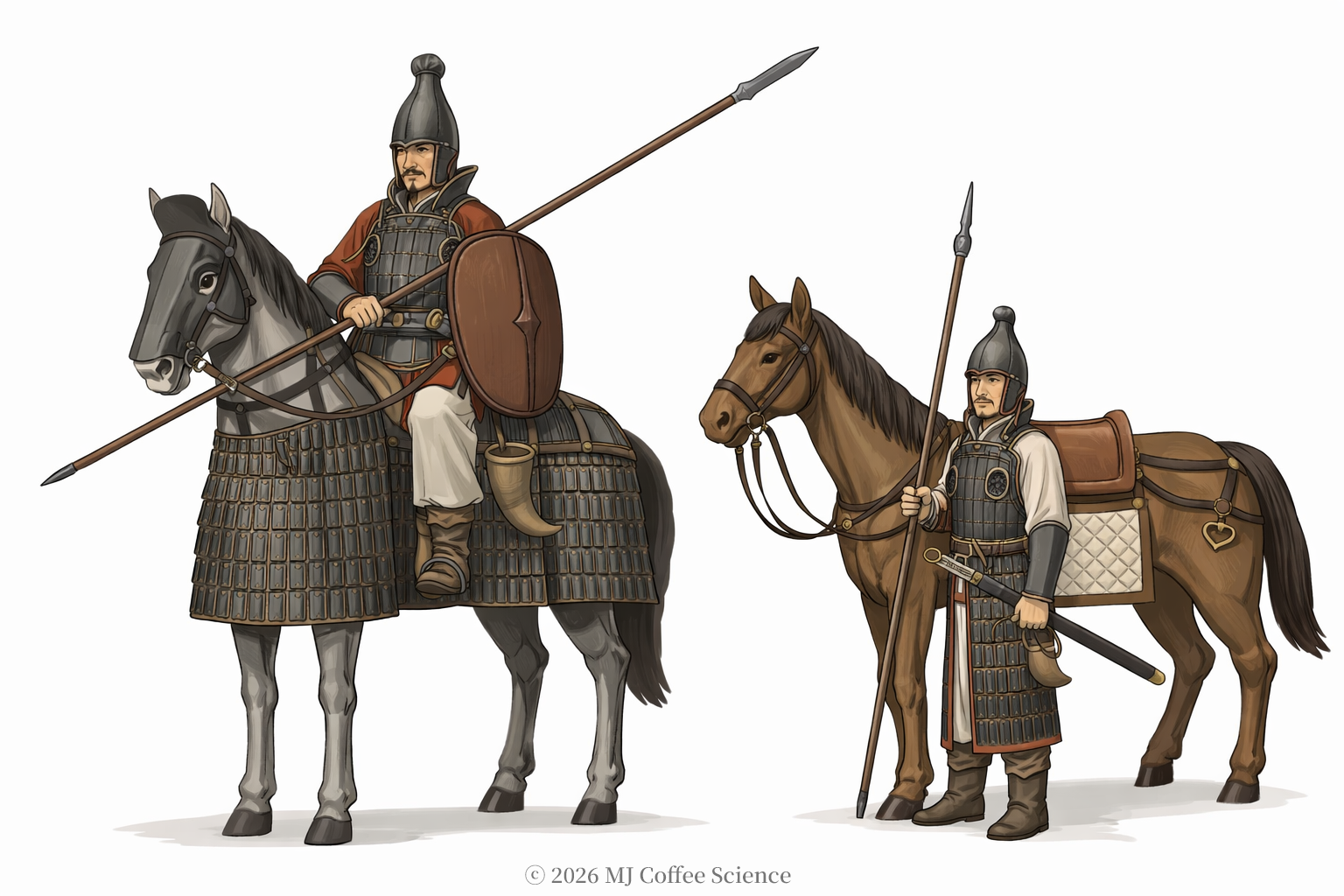
A crested helm rises over your brow, shading the sun; scale armor rests cold upon your shoulders. Silent warrior seated upon the horse’s back— do your eyes still search the far horizon?
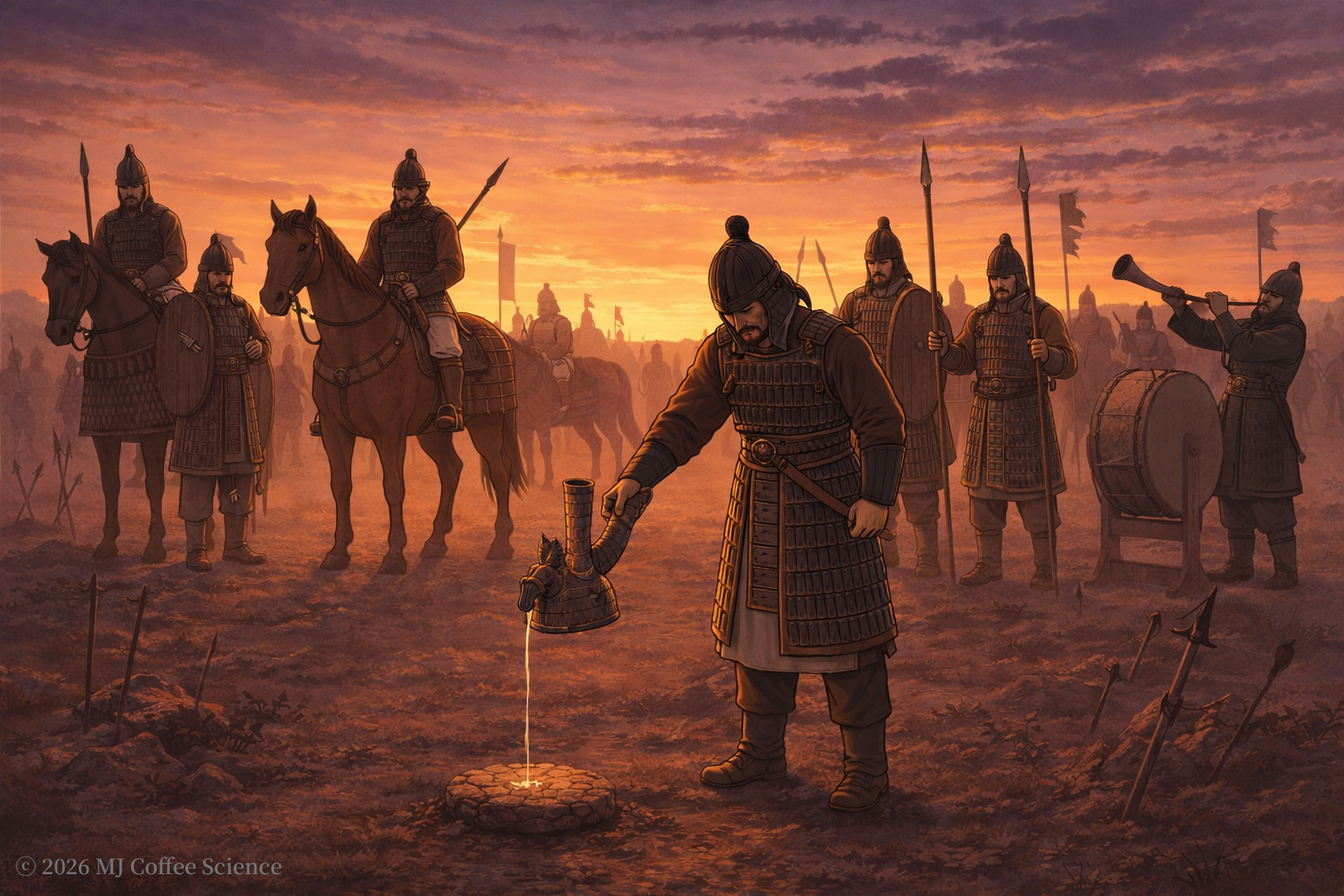
Two horn-cups rise in symmetry upon the horse’s haunch— were they a passage to gather the breath of heaven? One cup for wine in this world, one for peace in the next. When the offering flows past the horse’s chest and sinks into the waiting earth, you are already legend.
Land of iron— memory of blazing furnaces and hammering breath— sealed now in the chill of clay, yet you remain standing with a spirit that never breaks.
Morning of Gaya, when horse manes scattered the wind— fill those horn-cups and offer them to me today. With the breath of earth that endured a thousand years, moisten the long-dried hours of my life.
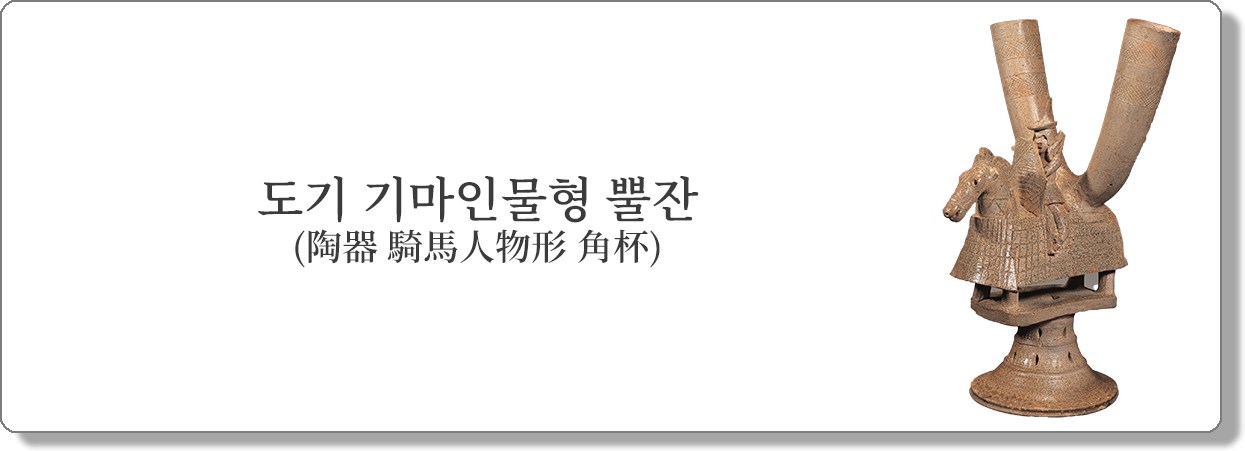
말을 타고 있는 사람의 모습을 한 높이 23.2㎝, 폭 14.7㎝, 밑 지름 9.2㎝의 인물형 토기로 삼국시대에 만들어진 것으로 추정된다.
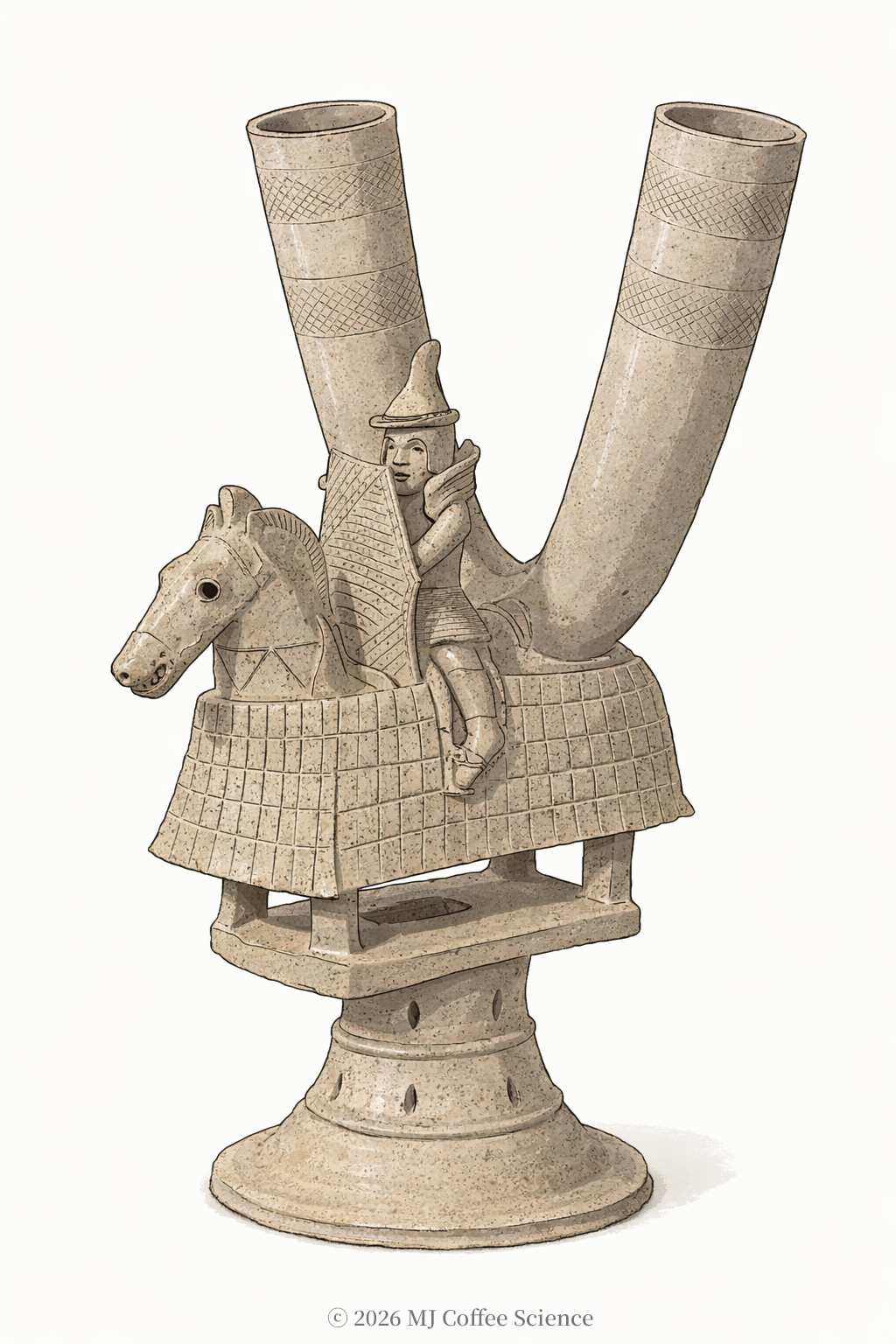
나팔모양의 받침 위에 직사각형의 편평한 판을 설치하고, 그 위에 말을 탄 무사가 올려져 있다. 받침은 가야의 굽다리 접시(고배)와 동일한 형태로, 두 줄로 구멍이 뚫려 있다. 받침의 네 모서리에는 손으로 빚어 깎아낸 말 다리가 있다. 말 몸에는 갑옷을 매우 사실적으로 묘사하였고, 말갈기는 직선으로 다듬어져 있다. 말 등에는 갑옷을 입고 무기를 잡고 있는 무사가 앉아있다.
무사는 머리에 투구를 쓰고 오른손에는 창을, 왼손에는 방패를 들고 있는데 표면에 무늬가 채워져 있다. 특히 지금까지 실물이 전하지 않는 방패를 사실적으로 표현하고 있어 주목된다. 무사의 등 뒤쪽에는 쌍 뿔모양의 잔을 세워놓았다.
이 기마인물형토기는 가야의 말갖춤(마구)과 무기의 연구에 귀중한 자료로 평가된다.
출처: 국가유산청 국가유산포털
🔎 Cultural Heritage Note : Mounted Warrior Horn-Cup Pottery
This anthropomorphic pottery vessel, depicting a mounted warrior, measures 23.2 cm in height, 14.7 cm in width, and 9.2 cm in base diameter. It is believed to have been produced during the Three Kingdoms period of Korea.
The figure is placed on a rectangular flat platform set upon a trumpet-shaped pedestal. A warrior riding a horse is mounted on top of this structure. The pedestal is identical in form to the high-footed dish (gobae) characteristic of Gaya pottery, and it is pierced with two rows of perforations.
At the four corners of the pedestal, horse legs modeled by hand are attached, forming the structural support of the sculpture.
The horse’s body is depicted wearing armor rendered with remarkable realism, while the mane is trimmed into straight, stylized lines. On the horse’s back sits a warrior clad in armor and holding weapons.
Behind the warrior stand two horn-shaped cups, set upright in symmetrical form.
This mounted warrior pottery vessel is considered an important archaeological source for the study of horse equipment and weaponry of the Gaya Confederacy.
Source: Korea Heritage Service – National Heritage Portal
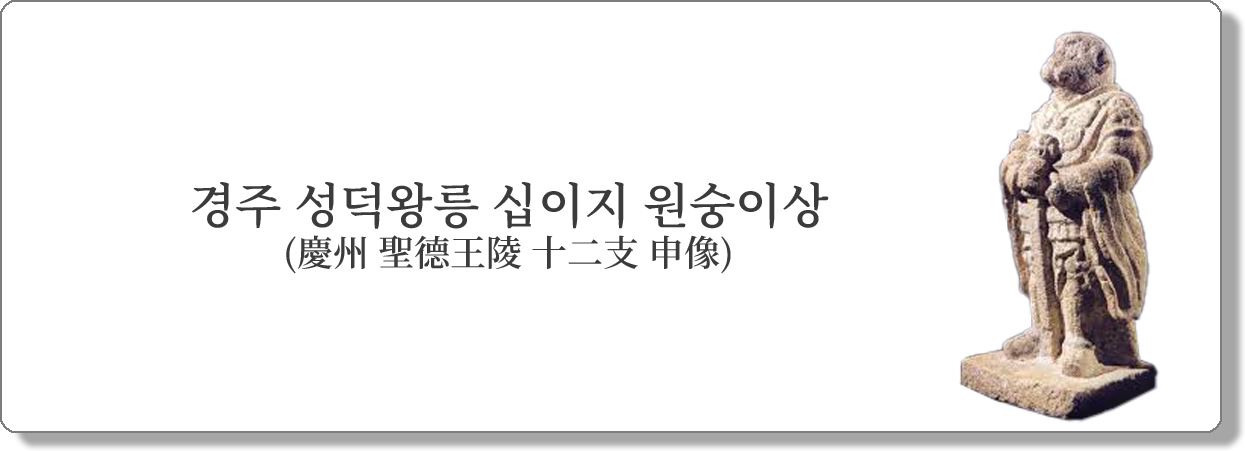
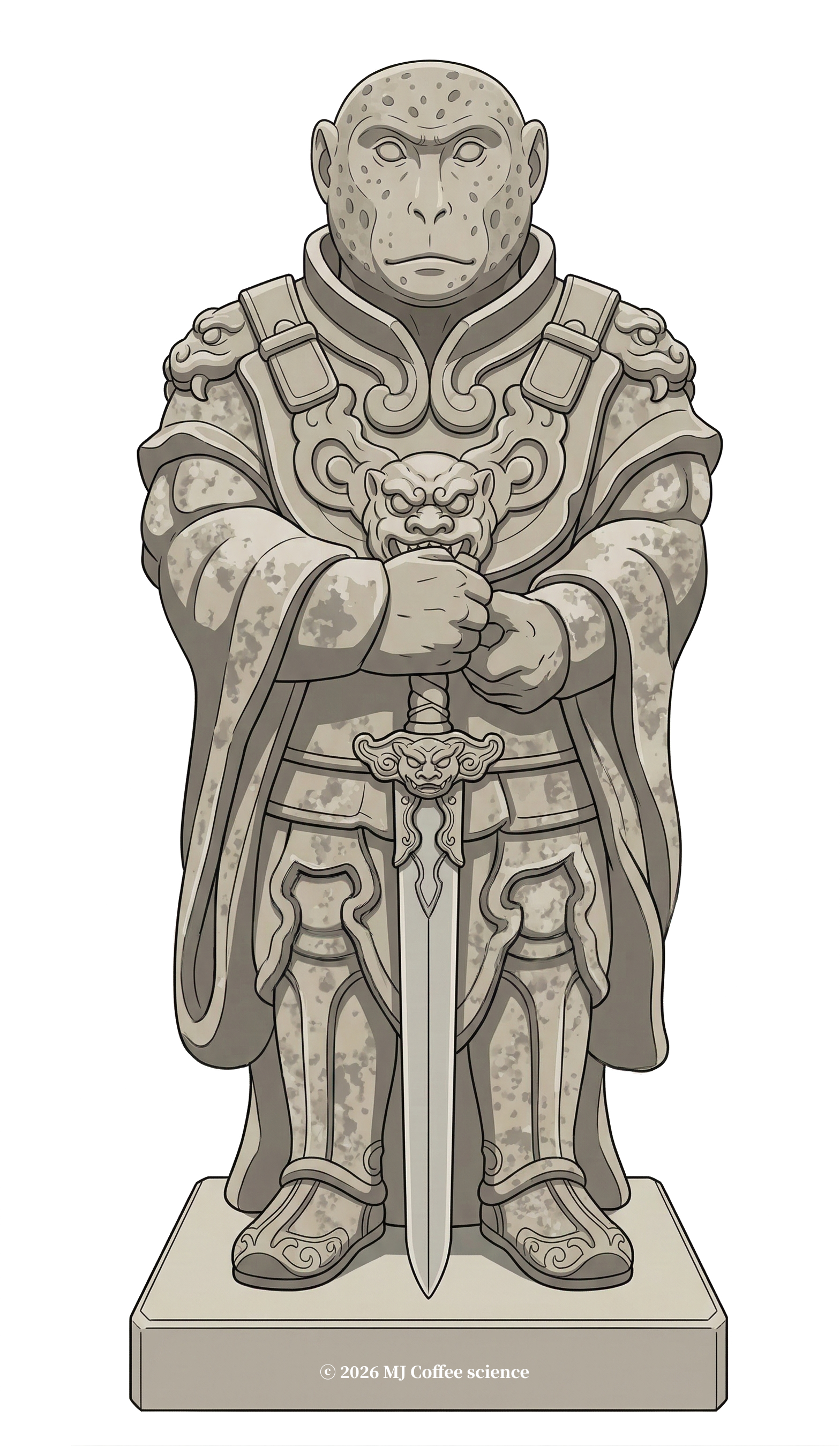
경주 성덕왕릉의 십이지신상은 왕릉을 둘러싸며 열두 방향을 수호하는 장군들이다. 그 가운데 원숭이상은 서남서 방향을 지키는 지혜의 수호자로서 천삼백 년 동안 왕릉을 지켜왔다.
Across the mist of Seorabeol, through the bending river of time, leaving behind the fallen stone-hearts of your brothers, you alone remain upright— gazing toward the sky of the southwest.
The virtue of the king you served rose like a mountain too high for reverence to reach; and the Way he unfolded was an ocean so deep no measure could sound its floor.
The merit he spread across heaven and earth flowed beyond the boundary of the living and the dead. When that grace, scattered like light upon the river of thirteen centuries, shattered into ripples upon time, you sealed within your cold stone body a burning spirit sworn to guard the realm.
Your keen eyes hold the force that drives away evil; the sacred sword in your right hand protects the king’s authority and the peace of the land. Though your companions fell to wind and weather and returned to dust, you alone endured— clad in the armor of wit and wisdom, as though by miracle.
The last sentinel standing beneath the museum lights, your silence is a cry that proves an age of forgotten peace once lived. And so today, before your ancient form of stone, we read again that name— higher than mountains, deeper than seas: Seongdeok.
경주에서 불국사 방향으로 가는 길의 동남쪽 구릉 소나무숲 속에 자리하고 있는 신라 제33대 성덕왕(재위 702 ∼ 737)의 무덤이다. 성덕왕은 신문왕의 아들로 본명은 융기이다. 당과 적극적인 교류를 하였으며 정치적으로 가장 안정된 신라의 전성기를 이끌어 나갔다. 『삼국사기』에 의하면 737년에 왕이 죽자 이거사(移車寺) 남쪽에 장사지냈다고 하는데, 현재 왕릉 북쪽에 이거사로 추정되는 절터가 있다.
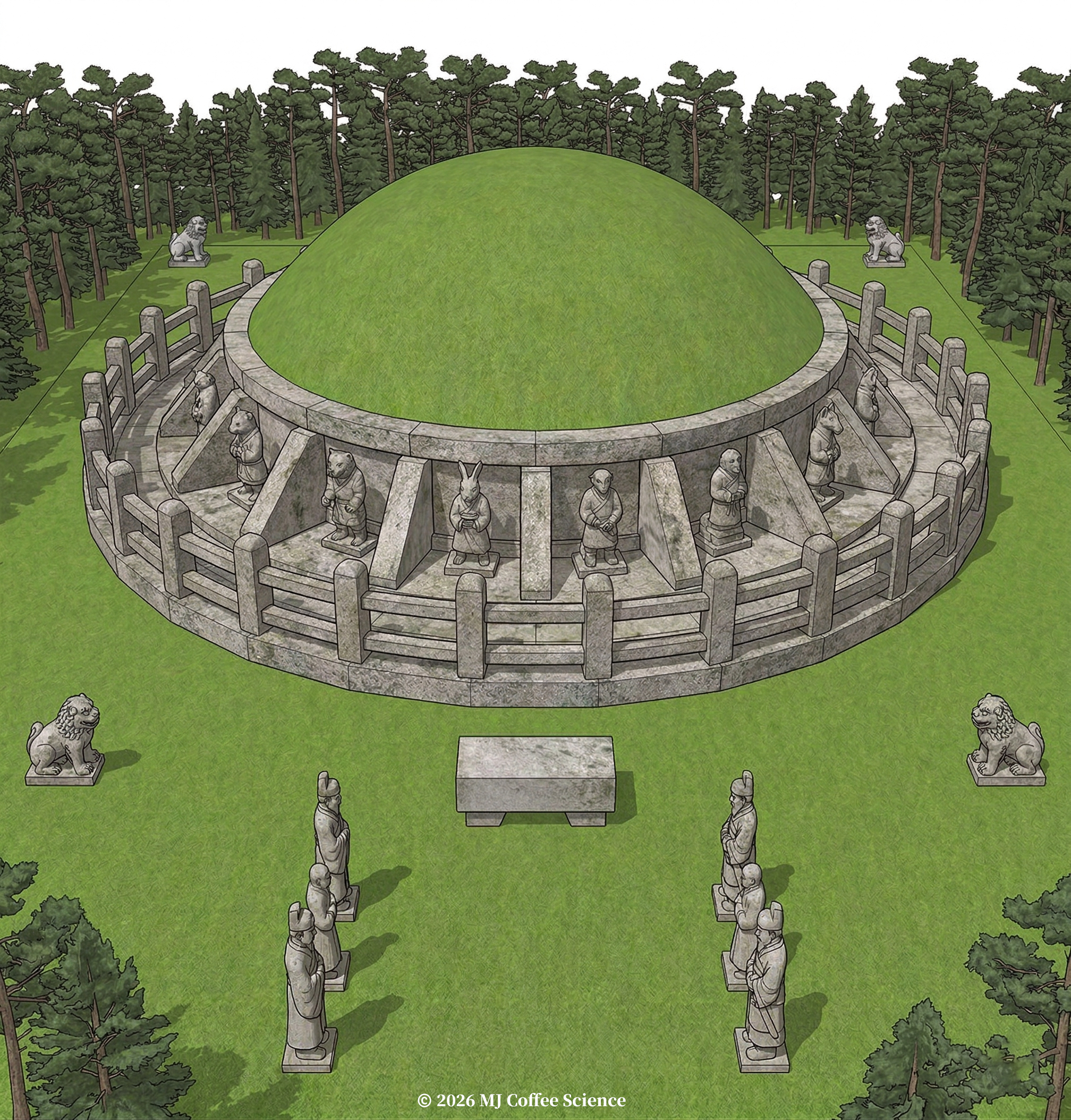
이 능은 밑둘레 46m 높이5m이다. 무덤 아래부분에는 둘레돌을 배치하여 무덤을 보호하도록 하였는데, 높이 90㎝ 정도의 돌(면석)을 두르고 그 위에 덮개돌인 갑석을 올렸다. 면석 사이에는 기둥 역할을 하는 탱석을 끼워 고정시켰으며, 그 바깥쪽에 삼각형의 돌을 세워 받치고 있다. 삼각형의 받침돌 사이에 12지신상이 배치되어 있는데 네모난 돌 위에 갑옷을 입고 무기를 들고 서 있는 모습의 조각이 심하게 파손되어 있다.
무덤 앞쪽에는 석상이 놓여있고 무덤 주위의 4모서리에는 돌사자를 배치하였다. 석상 앞쪽 양 옆으로 문인석·무인석 각 1쌍을 세웠던 것으로 보이나, 지금은 무인석 1개와 상반신만 남은 석인(石人) 1개가 남아 있다.
성덕왕릉에서 보이고 있는 석물의 사실적인 조각기법은 통일신라 초기 양식에 속하며, 왕릉은 통일신라시대의 왕릉으로서 완비된 모습을 갖추고 있다.
출처: 국가유산청 국가유산포털
🔎 Cultural Heritage Note : Zodiac Monkey Guardian Statue, Tomb of King Seongdeok, Gyeongju (慶州 聖德王陵 十二支 申像)
This statue represents the Monkey (申) of the Twelve Zodiac Guardian Figures surrounding the Tomb of King Seongdeok of Silla, located in a pine-covered hill southeast of the road leading from Gyeongju toward Bulguksa Temple. The tomb belongs to King Seongdeok (r. 702–737), the 33rd ruler of the Silla Kingdom.
King Seongdeok was the son of King Sinmun, and his birth name was Yunggi (隆基). During his reign, Silla maintained active diplomatic relations with the Tang dynasty, and the kingdom experienced one of the most stable and prosperous periods in its history.
According to the historical chronicle Samguk Sagi (History of the Three Kingdoms), the king died in 737 and was buried south of Igeo-sa Temple (移車寺). Today, the remains of what is believed to be the site of this temple can be found north of the royal tomb.
The burial mound measures approximately 46 meters in circumference and about 5 meters in height. Around the lower part of the mound runs a protective ring of stonework. This structure consists of facing stones (myeonseok) about 90 cm high, topped by capstones (gapseok). Between the facing stones stand vertical support stones (taengseok) that function like pillars, while triangular supporting stones are placed along the outer edge. Between these triangular stones stand the Twelve Zodiac Guardian statues, each carved as an armored warrior holding weapons. The sculptures are heavily damaged today, though they originally stood upon square bases surrounding the mound.
In front of the tomb stand additional stone figures, while stone lions are positioned at the four corners of the mound. It is believed that pairs of civil officials and military officials once flanked the front of the tomb. At present, however, only one military official statue and one fragmentary stone figure consisting of the upper torso remain.
The stone sculptures surrounding the tomb exhibit highly realistic carving techniques characteristic of the early Unified Silla period, and the tomb of King Seongdeok is considered one of the most complete examples of royal tomb architecture from the Unified Silla dynasty.
Source: Korea Heritage Service – National Heritage Portal